
For gyms, fitness brands, and coaches. We earn editorial backlinks on health and fitness publications built to withstand Google's toughest content standards.
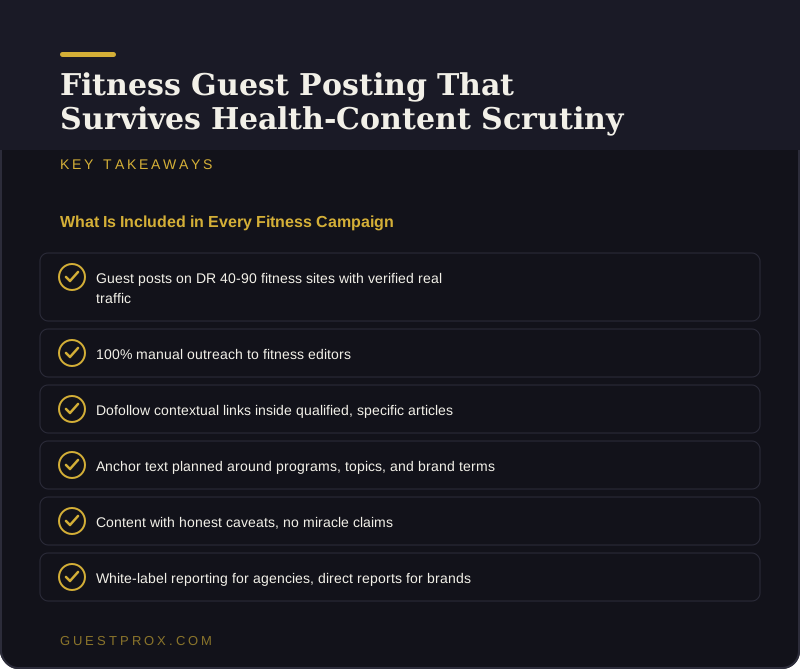
Fitness guest posting means publishing expert training, nutrition, and wellness content on real health and fitness publications, with a contextual backlink to your brand. Because fitness content affects people's health, every placement must meet the expertise standards Google applies to YMYL topics.
Anonymous generic articles no longer earn links or rankings here. Editors want qualified voices, specific programming, and honest caveats, not motivational fluff.
The niche is drowning in influencer content, so breaking through requires the opposite of typical fitness marketing: less hype, more specificity. A detailed guide to progressive overload for lifters over 40 earns editorial links because it is rare and genuinely useful.
Regulators have fined supplement brands for unsubstantiated claims, and editors know it. We write with proper qualifiers and cite actual research. That discipline is why our blogger outreach in fitness starts with credentialed voices, not keyword lists.
In fitness, specificity is the ranking strategy: expert detail earns the links that generic motivation never will.
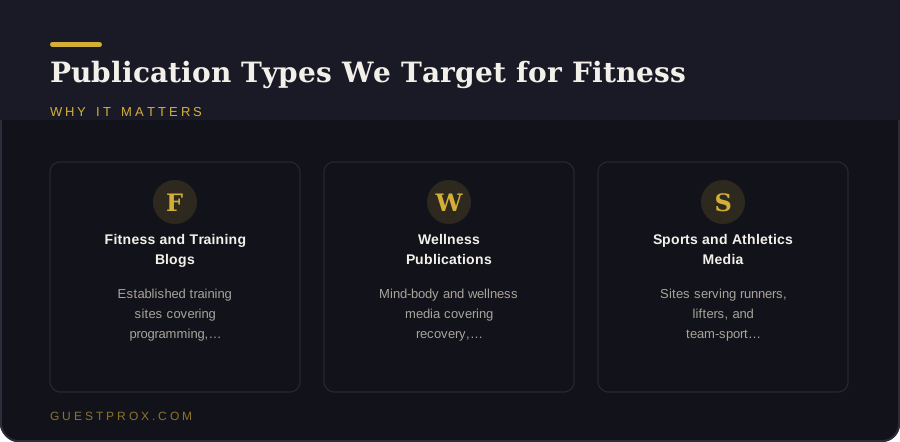
We pitch fitness publications where expertise is the entry ticket.
Established training sites covering programming, technique, and coaching. We contribute qualified, specific content their editors cannot source from generalists.
Mind-body and wellness media covering recovery, mobility, and sustainable habits. Honest, caveat-included content fits their editorial voice.
Sites serving runners, lifters, and team-sport athletes. Performance-focused angles earn links from publications with loyal, high-trust audiences.
Food-as-fuel publications where sports nutrition expertise is in constant demand. Practical, non-fad content gets accepted and cited.
Expertise-first deliverables, fully reported.
Five steps designed for a YMYL-scrutinized niche.
We map your fitness segment, the keywords that matter, and which publications link to competitors. This shows where expertise-driven placements will count most.
We prospect fitness publications with real traffic and genuine editorial standards, excluding content farms and link sellers. In this niche, placement quality is a safety issue.
We pitch specific, qualified topics: programming guides, technique breakdowns, recovery science. Editors respond because the content fills gaps their generalist writers cannot.
Our writers produce detailed, honest fitness content with proper caveats and no miracle promises. It reads like a coach wrote it, because that is the standard editors enforce.
Every link is verified live, dofollow, and contextual before reporting with full metrics. Agencies get the same report white-labeled.
Fitness content tells people what to do with their bodies, so Google applies the expertise standards it uses for medical content. The link is only as strong as the expertise behind the content.
Fitness editors ask who wrote the piece, what their credentials are, and whether the claims hold up. We build author credibility into every pitch: the writer's background, the sources cited, the caveats included. Placements earned this way carry the expertise signals ranking systems look for.
A placement making claims your legal team would not approve is a liability wearing a backlink costume. We keep every draft inside what a careful editor and a careful lawyer would both sign off on. That connection between topical relevance and link value is the whole game in fitness.
Fitness editors accept content their staff writers cannot produce: deep, specific, experience-backed training knowledge. The narrower and more practical the angle, the more likely your pitch fills a real gap.
A certified strength coach breaking down squat mechanics for lifters over forty, a dietitian explaining protein timing without the myths: credentialed voices are the scarcest resource in fitness media.
Content with numbers gets bookmarked, shared, and linked: periodization templates, progression schemes, recovery protocols with actual parameters. We pitch the specific guides that become reference material, because reference material is what other publications link to. Pairing that with niche edits on existing ranking fitness articles can accelerate results.
Fitness has one of the highest densities of link scams in SEO, because the keywords are valuable and buyers are often gym owners without technical teams. Our standard never bends: every publication gets checked for real organic traffic, genuine authorship, and an editorial process that rejects most pitches.
Pay special attention to traffic history, not just current metrics. A fitness blog with steady organic traffic over several years has a real audience; one with a sudden spike followed by a cliff was likely built to sell links. Traffic graphs tell the truth that domain metrics hide.
Beware the credential costume: sites with impressive-looking author bios that turn out to be stock photos and invented qualifications. Real expertise leaves a trail. Run any vendor through a backlink quality checklist before signing, and walk away from any site that would publish anything for money.
Supplement brands face an extra layer of risk. The FTC has fined companies for unsubstantiated product claims, and editors apply that same standard to outreach content. Any vendor willing to publish claim-heavy content without sourcing will cut corners on everything else too. Ask who writes the content, what their qualifications are, and how claims get verified. Vague answers mean vague standards. Every supplement-related draft we write gets a second pass where we strip any claim we cannot source. What survives is publishable; what does not was never worth the risk. Ask your current or prospective vendor if they do the same, and watch how they answer. Your brand's credibility is worth more than any single link.
Tell us about your brand or gym. We will map a placement plan on fitness publications that meet the niche's standards.
Chat on WhatsApp →Fitness overlaps with healthcare, beauty, and influencer-driven niches.
Authoritative sources if you want to go deeper on this topic.
Because fitness advice affects physical health, Google holds it to higher expertise standards. Content without demonstrated knowledge gets filtered, and links from low-quality fitness sites can hurt more than help. That is why we only target real publications with editorial standards and write content a qualified coach would stand behind.
Link sellers in fitness operate content farms and PBNs that look fit but have no real audience. We pitch real editors manually, verify traffic before outreach, and publish content that earns its place. No PBNs, no paid placements disguised as editorial, 100% white hat.
Typically 4 to 12 weeks. Fitness is competitive, but most competitors rely on thin content and social links, so editorial backlinks from trusted publications stand out quickly. Every placement is reported monthly with live URLs and metrics.
We don't publish prices. Every campaign is scoped to your targets and competition, so the fastest way to get an exact number is to message us on WhatsApp at +1 (213) 582-6001.
Yes, white-label fulfillment is core to what we do. Since 2018 we have delivered 1259+ guest posts, many for agencies serving fitness and wellness clients. Your branding is the only branding your clients see.
Yes. We will not publish unsubstantiated efficacy claims or disease-treatment language, and reputable editors will not either. Campaigns for supplement brands focus on training science, nutrition fundamentals, and lifestyle content where every claim stays defensible. That constraint is also what keeps the links safe long term.
Tell us about your fitness brand. We will map the editorial placements your competitors cannot easily replicate.
Global Service Delivery